
Metallurgical services
Heat
treatment
Stronger welds,
lower residual stress
We have been active in the non-destructive testing sector at the national and international levels for over 45 years. We perform localized resistance heat treatments on large parts and complex geometries. Although heat treatment is not part of non-destructive testing (NDT), it is a complementary service that customers often request. It consists of subjecting a weld to controlled temperatures for a defined period of time to improve its mechanical and metallurgical properties.
Where the oven
cannot go
The importance of localized resistance heat treatment on large pieces and complex geometries
Localized heat treatment of welds aims to modify the thermomechanical properties of specific areas without involving the entire component. These treatments reduce residual mechanical stresses and improve metallurgical characteristics, so as to increase resilience, fatigue resistance and corrosion resistance near the welds, reducing the risk of breakages or critical failures. Precision in managing temperatures and heating times is essential to achieve the desired results without compromising the integrity of the surrounding material.
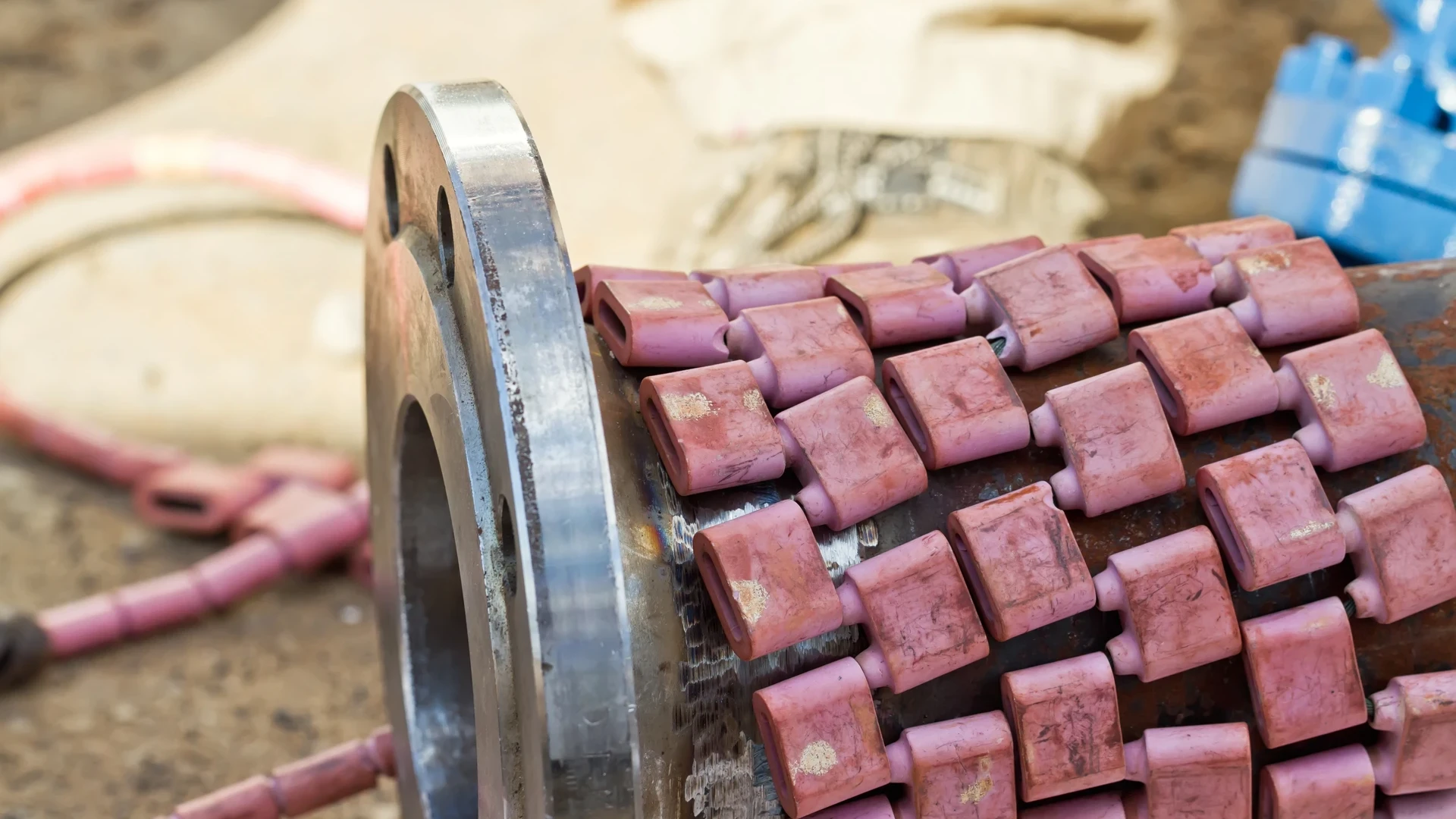
Localized resistance heat treatments are particularly suitable when the items cannot be treated in the oven. With this methodology it is possible to proceed by isolating the area close to the welds and propagating the heat with the aid of electrical resistors placed in contact with the material to be treated. A special instrumental apparatus records the obtained temperatures, in addition to modulating the electric current supplied to the resistors. Our technicians are able to carry out treatments on different structures in accordance with the regulations applied by customers, thanks to the use of latest generation equipment and tools periodically verified according to AWS, ASTM and ISO standards. Ecological ceramic fiber is used as a refractory material and its disposal follows controlled channels, as per current legislation.
Request information
Large parts or
complex geometries?
Tell us about your welds and the regulations that apply. Our team will get back to you.