
NDT techniques
Magnetic particle
testing
Where the field breaks, a defect shows
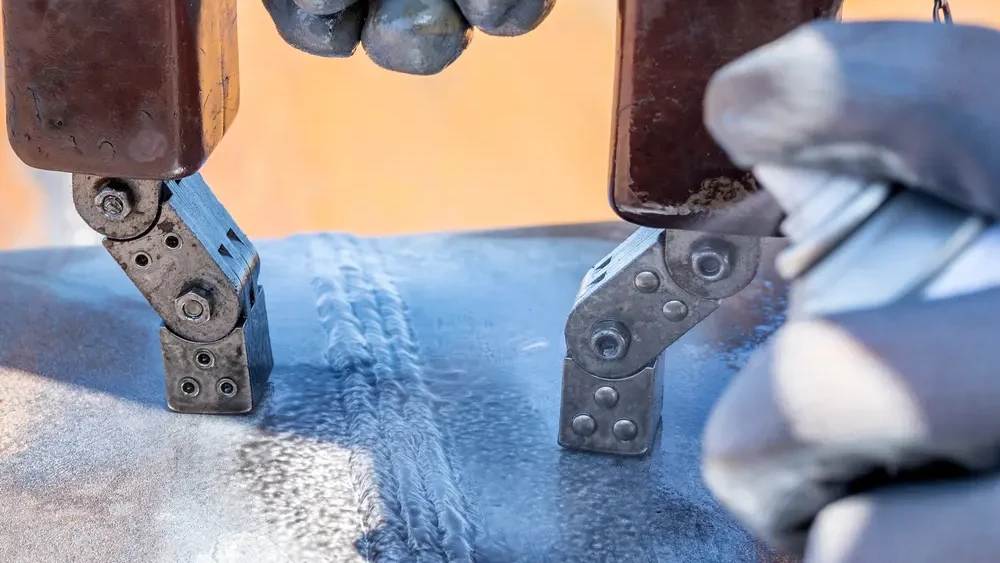
Magnetic particle testing, also known as magnetoscopy or magnetic particle inspection (MPI), is a non-destructive testing (NDT) technique used to detect surface and subsurface defects in ferromagnetic materials. It is based on the principle of magnetic induction and uses magnetic particles to reveal variations in the magnetic field caused by imperfections. For over 45 years, we have been performing NDT both nationally and internationally.
The advantages of
magnetoscopy in NDT
Sensitivity to superficial and internal defects
Magnetic particle inspection is sensitive to surface and sub-surface defects in ferromagnetic components, making it suitable for detecting flaws in material structure at different depths.
Quick and easy execution
Magnetic particle inspection can be performed relatively quickly, especially for the detection of surface defects making it suitable for large-scale inspections or on mass-produced components.
Versatility of materials
The technique can be used on a wide range of ferromagnetic materials, including steels, cast iron and iron alloys.
Defect localization
Magnetic particle inspection allows the location of defects to be precisely identified, facilitating evaluation and marking for future repairs.
Easy viewing of results
The application of magnetic particles generates a visible indication pattern, making it easier for operators to interpret the results.
Request information
Steel parts to check?
Tell us about the components and the standard you work to. We will reply with a proposal.