
NDT techniques
Liquid penetrant
testing
Making surface defects visible
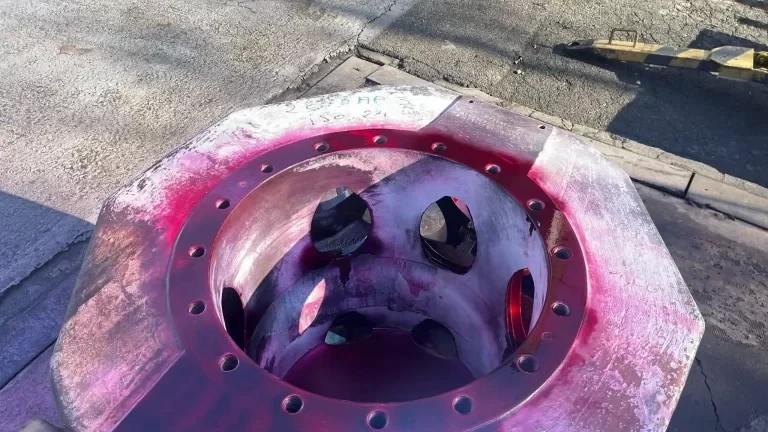
Liquid penetrant testing is one of the most traditional surface methods for highlighting surface-breaking discontinuities on solid materials, both metallic and non-metallic. The method uses capillary action to draw a liquid penetrant into surface defects. Cleaning and the application of a developer then make indications of defects visible. For over 45 years, we have been performing non-destructive testing both nationally and internationally.
Inside
pipes
Non-destructive testing with semi-automatic liquid penetrants inside pipes
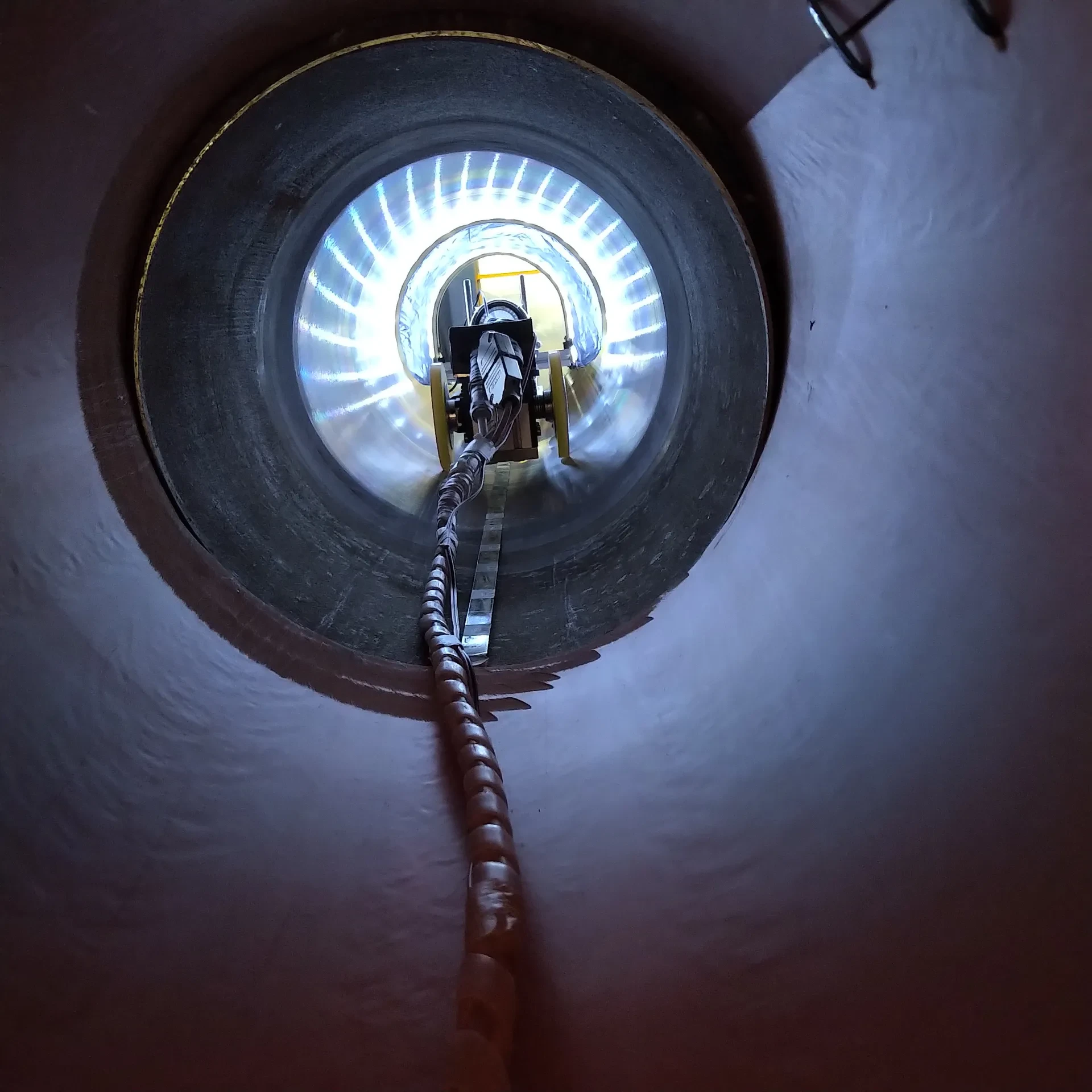
We specialize in liquid penetrant (PT) testing inside pipes, bends, flanges or special pieces, in particular internally clad materials in austenitic alloys, starting from 6'' in diameter. The test can be carried out either only on the longitudinal weld or on the entire internal surface of the piece. For this purpose, we use small semi-automatic robots (called "pigs") which carry out the distribution of the penetrant, washing and application of the developer. The final visual check is carried out using cameras mounted on pigs, or latest generation 3D videoendoscopes.
The advantages of
liquid penetrants in NDT
Sensitivity to surface defects
Liquid penetrants are highly sensitive to surface defects, including cracks, porosity and other imperfections that could affect structural integrity.
Easy application
The application of liquid penetrants is relatively simple, and the technique is suitable for both small parts testing and large-scale inspection.
Versatility of materials
Liquid penetrants can be used on a wide range of materials, including metals, ceramics, plastics and composites.
Adaptability to complex surfaces
This technique can be applied to complex and irregular surfaces, including components with intricate geometries.
Speed of execution
Turnaround times are generally quick, making liquid penetrants suitable for quick inspections in situations where time is critical.
Visual identification of defects
Defect indications become visible after application of the developer, making it easier for operators to interpret the results.
Low-cost application
Liquid penetrants are often a low-cost option for detecting surface defects, making them useful in a variety of industrial applications.
Request information
Cracks on
the surface?
Tell us about the component, the material and where it is. We will reply with a proposal.